Discovering the Playful Power of Teddy Bear Display Font
There’s a certain magic in a font that feels approachable and friendly before a single word is read. Teddy Bear, a display font with a distinctly fun and cute personality, captures that feeling perfectly. It’s the kind of typeface that brings a smile, evoking a sense of warmth and playfulness that can transform a good design into a memorable one. For anyone crafting a brand aimed at families, children, or simply a younger-at-heart audience, finding a font with this specific kind of charm is like striking gold.
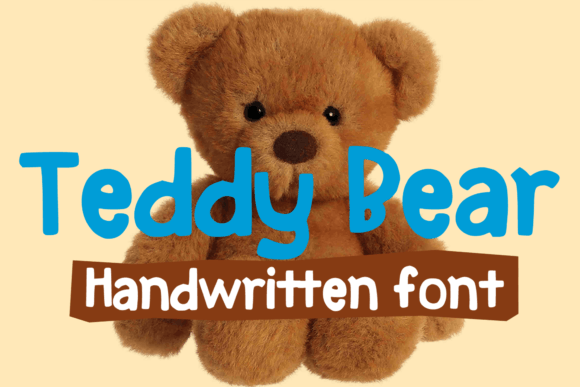
At its core, Teddy Bear is a visual storyteller. Its letterforms are rounded, soft, and slightly irregular, mimicking the lovable imperfections of a well-worn stuffed animal. This isn’t a font for fine print or lengthy legal documents. Instead, it excels in moments where personality and emotion are paramount. Think of the title on a children’s storybook cover, the bold headline on a birthday invitation, or the playful branding on a bakery’s packaging. The font’s inherent warmth helps build an immediate emotional connection with the viewer, making your message feel more personal and less corporate.
From Digital Screens to Physical Products: Where Teddy Bear Shines
The true test of a creative font is its versatility across different mediums. Teddy Bear proves its worth as a valuable design asset by adapting seamlessly to both digital and physical projects. On social media graphics, it cuts through the noise with its distinctive character, making announcements for sales, new products, or community events feel engaging and fun. For a small business owner designing their own Instagram posts or Facebook ads, this font can become a recognizable part of their visual identity.
When it comes to logo design, especially for brands in the kids' clothing, toy, or education sectors, Teddy Bear offers a strong foundation. Its playful aesthetic communicates joy and safety, which are powerful brand values. Pair it with a simple sans serif font for body text, and you have a balanced and professional brand identity system. This principle of font pairing is crucial. Teddy Bear works best as a headline or accent font, allowing it to grab attention without overwhelming the layout. A clean, neutral sans serif or serif font can handle the heavier lifting of readability in paragraphs.
Beyond the screen, this typeface excels in print and merchandise. Imagine it on a t-shirt design for a family reunion, on sticker sheets for a craft project, or as the title font for a local community fair poster. Its legibility at larger sizes makes it ideal for these applications. For entrepreneurs creating physical products, using a font like Teddy Bear on packaging can directly influence perception, suggesting that the product inside is made with care and is intended to bring joy.
Building a Cohesive and Engaging Brand Experience
Consistency is the bedrock of strong brand recognition. When a customer sees the same friendly, rounded typography on your website, your product tags, your social media posts, and your email newsletters, it creates a unified and trustworthy experience. Teddy Bear can serve as a central pillar of this consistency for the right brand. Its unique style becomes a signature, making your materials instantly identifiable even before the logo is fully processed.
Improving audience engagement often comes down to approachability. A font that feels cold or overly technical can create a subconscious barrier. In contrast, the friendly demeanor of a display font like Teddy Bear invites interaction. It’s perfect for call-to-action buttons on a website (“Join the Fun!”), for headings in a parenting blog, or for the title of a digital download like a printable birthday card. The font itself sets the tone, telling your audience that the experience ahead will be light-hearted and enjoyable.
However, practical application requires thoughtful testing. Never assume a font will work perfectly in your specific context. Always create mockups. Place the Teddy Bear font into your actual design—whether it’s a website header, a product label, or a social media post—and view it at the intended size. Check its readability on different devices and in print proofs. A font that looks charming on a large poster might become difficult to read if used for a small button on a mobile screen. This testing phase is non-negotiable for professional presentation.
Smart Integration: Licensing, Pairings, and Practical Tips
Before you commit to any premium font for a commercial project, understanding the license is essential. Teddy Bear, like many high-quality creative fonts, comes with a specific license that outlines how it can be used. Does it cover a single user or a whole team? Can you use it in products for sale, like t-shirts or mugs? Is it licensed for web use via @font-face? Reviewing these details ensures you’re using the asset legally and protecting your business from future issues. Most reputable font foundries make this information clear on their sales pages.
Once licensed, integrating Teddy Bear into your workflow is straightforward. Most font files come with multiple styles, which might include regular, bold, or even alternative characters. Explore these options. Sometimes, a stylistic alternate for a letter like ‘a’ or ‘g’ can add that extra touch of uniqueness to your headline. When pairing it with other typefaces, create a simple hierarchy. Use Teddy Bear for your main headline to capture attention. Use a highly legible sans serif like Open Sans or Lato for subheadings and body copy. This creates a clear visual flow that guides the reader’s eye and maintains professionalism.
Ultimately, the value of a font like Teddy Bear lies in its ability to convey a specific, positive emotion efficiently. It’s not about being the right choice for every project. It’s about being the perfect choice for projects that need to communicate warmth, fun, and approachability. By applying it thoughtfully to branding, packaging, digital content, and merchandise, designers and business owners can create a cohesive and delightful visual language that resonates deeply with their intended audience. It’s a tool that, when used with care, doesn’t just display words—it enhances the entire story you’re trying to tell.