Strike Force: A Techno-Sci-Fi Font for Bold Visual Identities
Sometimes a design project calls for typography that doesn't just sit quietly on the page—it needs to make a statement, command attention, and inject a sense of futuristic energy into the work. Whether you're crafting a logo for a tech startup, designing a poster for an electronic music event, or creating packaging for a new gaming accessory, the typeface you choose carries immense weight. It sets the tone before a single word is read, communicating mood, industry, and ambition through its very form. This is where a specialized display font like Strike Force enters the conversation, offering a distinct visual language for projects that aim to feel modern, dynamic, and technologically charged.
A Typeface Engineered for Impact
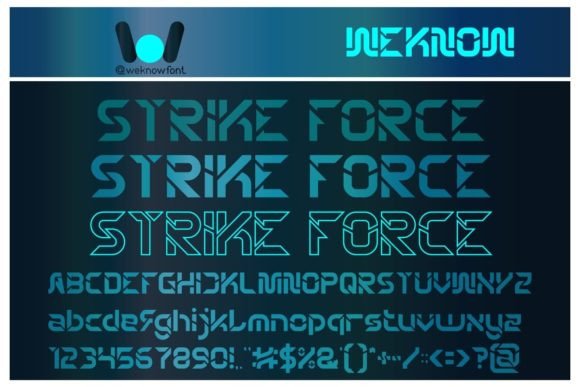
Strike Force is a techno-sci-fi display typeface characterized by its sharp angles, geometric construction, and a distinctly engineered aesthetic. It draws inspiration from science fiction interfaces, military stencil typography, and the clean, aggressive lines of modern technology branding. The letterforms often feature uniform stroke widths, squared-off terminals, and a structured rhythm that feels both precise and powerful. This isn't a font for body text or delicate invitations; it's a purpose-built tool for headlines, logos, and branding elements where immediate recognition and a strong personality are paramount. Its visual appeal lies in this unapologetic clarity—it communicates strength, innovation, and forward momentum without ambiguity.
What makes it particularly versatile within its niche is the range of styles typically included in a premium font family like this. You might find a solid, bold weight for maximum presence, a lighter weight for more nuanced tech branding, and perhaps outline or stencil variations that allow for creative layering and effects. This variety gives designers the flexibility to maintain a consistent visual identity across different applications, from a thick, impactful logo to a more detailed secondary headline on a website.
Practical Applications Across Creative Fields
The true test of any design asset is how it performs in real-world scenarios. Strike Force finds its natural home in projects where a contemporary, tech-forward, or entertainment-driven aesthetic is desired. Consider its use in logo design and brand identity systems. For a cybersecurity firm, a drone racing league, or a mobile app developer, this typeface can instantly position the brand within the innovation space. Its geometric precision lends itself well to logotypes that need to be scalable and recognizable, whether etched onto a product, displayed on a mobile screen, or printed on a business card.
Beyond static logos, the font excels in dynamic contexts. Movie posters for sci-fi thrillers, album covers for electronic artists, and title screens for video games leverage its dramatic presence to build anticipation and set genre expectations. In the realm of packaging design, it can make a product on a crowded shelf stand out, especially for tech gadgets, energy drinks, or specialty hardware. The same principles apply to merchandise—apparel, posters, and stickers benefit from a typeface that looks as good on a t-shirt as it does on a screen.
For digital creators and marketers, Strike Force becomes a powerful component of social media graphics and website headers. A YouTube channel focused on tech reviews, an Instagram profile for a digital artist, or a Kickstarter campaign page can use this font to create a cohesive and professional look that aligns with their content's subject matter. It helps in creating visual consistency, which is a cornerstone of strong brand recognition. When your thumbnails, banners, and website all share the same typographic voice, your audience begins to associate that style with your content, building familiarity and trust.
Integrating Strike Force Into Your Design Workflow
Choosing the right font style from within the Strike Force family is your first practical step. The bold or regular weight is typically your go-to for primary logos and major headlines where you need the design to pop. The lighter weights can be used for subheadings, taglines, or in contexts where a slightly less dominant presence is required, such as on a website's navigation menu or in the fine print of a poster. If outline or stencil versions are available, they offer excellent opportunities for creative effects—imagine a headline where the outline is filled with a gradient or a pattern, adding depth without compromising the font's structural integrity.
Pairing typography is a critical skill, and Strike Force, with its strong personality, requires a thoughtful counterpart. Because it is a display font, it pairs best with highly legible, neutral body text fonts. A clean sans-serif like Helvetica, Arial, or a more modern geometric sans-serif often works well, providing a calm and readable foundation that doesn't compete for attention. For projects that require a bit more warmth or contrast, a simple, elegant serif font can also create an interesting juxtaposition, though this pairing should be tested carefully to ensure the techno feel isn't diluted. The key is to let Strike Force own the headlines and key branding moments, while the supporting font handles the longer-form information.
Always test your font choices in context. A typeface that looks stunning on a design mockup might lose its impact when scaled down for a favicon or become difficult to read at a distance on a poster. Print out samples, view them on different screens, and assess readability at various sizes. Pay special attention to the clarity of similar characters (like uppercase I, lowercase l, and the number 1) in the specific weight you plan to use. Furthermore, understanding the commercial licensing that comes with the font is non-negotiable for professional work. Ensure the license covers your intended use, whether it's for a single client project, multiple commercial products, or widespread digital distribution. This due diligence protects you legally and ensures your project can proceed without typographic roadblocks.
Ultimately, a typeface like Strike Force is more than just a collection of letters; it's a design decision that communicates a specific vision. It's for the creator who wants to evoke a sense of cutting-edge technology, cinematic drama, or competitive energy. By understanding its visual language, applying it to the right projects, and pairing it wisely, you can harness its power to build stronger brand identities, create more engaging marketing materials, and give your creative work a distinct and professional edge that resonates with your intended audience.