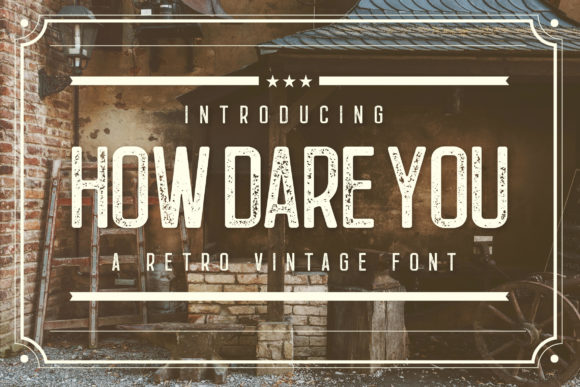
How Dare You: A Quirky Display Font for Bold Brands
There's a moment in every design project where you need type that speaks before it's read. Not just letters on a page, but personality—something that stops a scrolling thumb, catches an eye across a shelf, or makes someone lean in closer. That's the space where How Dare You lives. It's a display font with enough character to own a room, yet versatile enough to work across contexts you might not expect.
If you've been searching for a typeface that breaks away from the safe, sanitized fonts dominating your toolkit, this one deserves a closer look. It's quirky without being illegible. Bold without being aggressive. And when paired thoughtfully, it can transform a forgettable design into something people actually remember.
What Makes This Typeface Stand Out
How Dare You isn't trying to be everything to everyone—and that's precisely what makes it useful. Display fonts live or die by their personality. Some try too hard and end up looking gimmicky. Others play it so safe they blend into the background. This font threads the needle between expressive and functional in a way that feels genuinely fresh.
The letterforms carry a certain playfulness. There's an energy baked into the shapes—slightly unexpected curves, proportions that feel intentional rather than rigid. It reads as modern typography with a wink, something that acknowledges design trends without being enslaved to them. Whether you're working on a logo design for a new coffee brand, building out social media graphics for a lifestyle blog, or designing packaging for artisan goods, that personality translates well.
What's worth noting is how it performs at scale. Many creative fonts look charming in a headline but fall apart when used across a full brand identity. How Dare You holds up. The letter spacing, the weight distribution, the way individual characters interact with each other—it all works together to create something cohesive rather than chaotic.
Where This Font Actually Works
Let's get practical. A font is only as good as its application, and this one has surprising range. Here's where designers and business owners are finding real value:
Branding and Identity Work — If your brand voice is confident, approachable, and slightly unconventional, this typeface communicates that instantly. Think boutique studios, indie food brands, creative agencies, or any business that wants to feel human rather than corporate. It works beautifully for brand marks, taglines, and secondary headline treatments within a broader brand identity system.
Packaging Design — Standing out on a shelf—physical or digital—requires typography that does heavy lifting. How Dare You brings enough visual weight to product names and descriptors without overwhelming supporting information. Pair it with a clean sans serif font for nutritional details or descriptions, and you've got a packaging layout that feels both distinctive and shoppable.
Social Media Graphics — Instagram carousels, Pinterest pins, TikTok overlays, YouTube thumbnails—these formats demand fonts that communicate fast. A display font like this one grabs attention in the fraction of a second most people give a post before deciding to engage or keep scrolling. Use it for punchy quotes, announcement headers, or campaign hooks.
Website Headers and Blog Design — Your homepage hero section, blog post titles, landing page headlines—these are prime real estate for a font with personality. How Dare You works well for web design when used strategically in headline positions, letting a more neutral serif font or sans serif handle body copy. That contrast actually strengthens both typefaces.
Editorial and Print Materials — Magazine covers, event posters, book chapter openers, zine layouts. Editorial design thrives on typographic tension, and this font brings exactly that. It's the kind of typeface a publication might use for a recurring column header or a special feature spread.
Merchandise and Invitations — Tote bags, stickers, mugs, wedding invitations, event flyers. For merchandise design, the font's distinctiveness becomes a selling point. People buy products that feel curated and intentional, and typography plays a bigger role in that perception than most realize.
Marketing Assets and Digital Products — Email headers, lead magnet covers, course module titles, sales page headlines, ad creative. Marketing materials need to convert, and strong typography is one of the most underrated conversion tools available. A well-chosen premium font elevates the perceived value of whatever you're selling.
Making It Work With Other Fonts
No font exists in isolation. The real magic of How Dare You emerges when you start testing font pairings. Because it carries so much personality in display sizes, it benefits from being grounded by something more understated.
Try pairing it with a geometric sans serif for a modern, clean contrast. Something like a neutral grotesque typeface for body text lets the display font do its job without competing. If your project leans editorial or literary, a classic serif font underneath can create a beautiful tension between old and new.
The key principle: contrast creates hierarchy. Your audience should immediately understand what to read first, second, and third. How Dare You earns the top spot in that hierarchy naturally. Let your supporting typeface handle the information-heavy work—paragraphs, captions, fine print—while the display font owns the moments that matter most.
Spend time testing these combinations before committing. Set real copy, not just "Lorem ipsum." See how the fonts interact with your actual content, your color palette, your imagery. Typography decisions made in isolation often fall apart in context.
Thinking About Licensing and Font Styles
Before you commit any commercial font to a client project or your own business, understand the licensing. Most premium font licenses cover standard commercial use—websites, printed materials, logos, social media. But some licenses have restrictions on things like app embedding, broadcast use, or merchandise production beyond certain quantities.
Read the license terms. It takes five minutes and saves you from headaches later. If you're a designer handing files off to clients, make sure they have appropriate licensing too. This is one of those boring-but-essential details that separates professionals from hobbyists.
Also take time to explore what's included with the font family. Many display fonts now come with multiple weights, stylistic alternates, ligatures, and extended character sets. Understanding what's available means you can push the typeface further. Maybe a stylistic alternate of a particular letter solves a kerning issue. Maybe a different weight works better for subheadings than you initially expected. Explore the full toolkit before settling on your approach.
Readability Still Matters
Here's where some designers get into trouble with expressive display fonts: they forget that text still needs to be read. How Dare You works because it maintains legibility even at its most stylistic. But your responsibility as a designer is to use it wisely.
Keep display fonts for headlines, titles, and short bursts of text. Don't set body copy in a display typeface—your readers will thank you. Pay attention to size, contrast against backgrounds, and line length. A beautifully styled headline means nothing if someone can't read it on their phone screen or from six feet away on a poster.
Test your designs at multiple sizes and on multiple devices. What looks stunning on your 27-inch monitor might be illegible on a smartphone. Print a proof if you're working on physical materials. These small quality checks make the difference between work that looks professional and work that looks like a first draft.
Bringing It All Together
Typography is one of those design elements that works best when people don't consciously notice it—but feel its effect. How Dare You is the kind of typeface that creates that feeling. It's distinctive enough to build recognition around, flexible enough to use across a brand ecosystem, and well-crafted enough to hold up in professional contexts.
Whether you're building a brand from scratch, refreshing an existing identity, or just looking for a display font that doesn't feel like every other option on the market, it's worth exploring. Pair it intentionally, use it strategically, and let its personality do what it does best—make people pay attention.