Your Panda: The Font That Brings Playful Whimsy to Your Brand
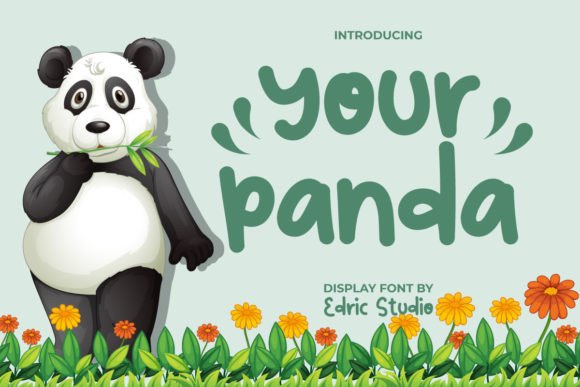
There's something undeniably magnetic about typography that feels human. In a digital landscape saturated with sterile sans-serifs and predictable serifs, a font that captures the authentic charm of childhood handwriting stands out immediately. Your Panda does exactly that—it's a funny display font that doesn't take itself too seriously, yet delivers serious visual impact. Inspired by the imperfect, endearing quality of a child's handwriting, this typeface manages to be both whimsical and remarkably legible. For designers, entrepreneurs, and creative professionals seeking a typeface with personality, Your Panda offers a refreshing alternative to the ordinary.
Why Handwritten Display Fonts Resonate with Modern Audiences
We live in an era where authenticity drives connection. Consumers scroll past polished, corporate-feeling designs in milliseconds. What stops them? Something that feels genuine. A handwritten display font like Your Panda taps into nostalgia and warmth—qualities that make audiences feel comfortable and engaged. Think about the last time you received a handwritten note versus a typed email. The handwritten one felt more personal, didn't it? That same psychology applies to visual branding. When a bakery uses a playful typeface on its packaging, or a children's boutique selects a fun script for its logo, customers perceive the brand as approachable and human.
Your Panda's design draws directly from the unrefined beauty of how children form letters. The slightly uneven baseline, the playful curves, the organic weight variations—these aren't flaws. They're features that give the typeface its distinctive character. Yet unlike many novelty fonts that sacrifice function for style, this one remains surprisingly easy to read at various sizes. That balance between personality and practicality is what separates a useful design asset from a novelty you'll use once and archive.
Practical Applications Across Industries
One of the strongest arguments for adding a creative font like this to your toolkit is its sheer versatility. The typeface works beautifully across a spectrum of projects, from digital interfaces to physical products. Here's where designers and business owners commonly find success with a font of this nature:
- Logo Design: Brands targeting families, children, or lifestyle audiences benefit enormously from a handwritten aesthetic. A logo set in Your Panda immediately communicates warmth and playfulness.
- Packaging Design: Artisan food products, handmade cosmetics, toy shops, and boutique retailers can use this typeface to differentiate their shelf presence from competitors relying on generic typography.
- Social Media Graphics: Instagram stories, Pinterest pins, and Facebook posts featuring handwritten-style text tend to feel more organic and less advertisement-heavy, boosting engagement rates.
- Event Invitations: Birthday parties, baby showers, community fairs, and casual corporate events all suit the lighthearted tone of a display font like this.
- Website Headers and Blogs: Used strategically for headlines and accent text, it can inject personality into an otherwise clean web layout without compromising the overall design system.
- Merchandise and Print Materials: Tote bags, mugs, stickers, greeting cards, and posters benefit from typefaces that feel handcrafted and personal.
- Editorial Design: Magazine spreads, especially those targeting parenting, lifestyle, or creative niches, can use playful display fonts for pull quotes and section headers to break visual monotony.
The key is matching the font's personality to your project's goals. A children's clothing brand launching a new collection has every reason to embrace this aesthetic. A law firm rebranding its website probably does not. Context matters enormously in typography selection.
Building a Cohesive Brand Identity with Typography
Typography is one of the most overlooked elements of brand identity, yet it quietly shapes how people perceive your business. When your typeface choices align with your brand's voice and values, you create visual consistency across every touchpoint. Your Panda, used as a display or accent font within a broader typographic system, can become a signature element that audiences associate exclusively with your brand.
Consider how brands like Innocent Drinks or Mailchimp use playful typography to reinforce their approachable personalities. The font becomes part of the brand's DNA. If you're a small business owner running a toyshop, a children's clothing line, or a family-friendly restaurant, incorporating a handwritten display font into your visual identity tells customers exactly what kind of experience they can expect before they read a single word of copy.
That said, a single font rarely carries an entire brand identity alone. Think of Your Panda as the personality piece in your typographic toolkit. Pair it with a clean sans serif for body text, and you'll achieve a professional presentation that balances whimsy with readability. Testing font pairings before committing to a final design is always worth the time. Set your headline in Your Panda, use a neutral typeface for paragraphs, and evaluate how the combination feels at different sizes and on different backgrounds.
Readability: The Non-Negotiable Factor
Every designer has encountered a gorgeous handwritten font that falls apart in real-world application. Letters blur together, certain character combinations become illegible at small sizes, or the overall texture becomes visually exhausting in long passages. This is where Your Panda distinguishes itself. Its letterforms maintain clear distinction from one another, even when mimicking the natural flow of handwriting. The spacing feels intentional rather than haphazard, and the x-height supports comfortable reading in display contexts.
Still, responsible design means understanding limitations. Display fonts—regardless of how legible they are—work best at larger sizes. Reserve Your Panda for headlines, logos, short phrases, and accent text rather than setting entire paragraphs in it. For body copy, stick with a well-designed serif font or sans serif that supports extended reading. This isn't a limitation; it's simply how display typography functions within a complete design system.
When evaluating any premium font for a project, test it in context. Mock up your actual deliverable—whether that's a business card, a website hero section, or a product label—and see how the typeface performs under real conditions. Check how it renders on screens versus in print. Examine individual letterforms and common pairings like "Th," "fi," and "oo" to ensure they hold up at your intended size.
Licensing and Commercial Use Considerations
Before incorporating any creative font into client work or commercial products, understanding the licensing terms is essential. Most premium fonts come with specific usage rights that dictate how many devices can install the typeface, whether it can be embedded in digital products, and what commercial applications are permitted. Always review the license agreement carefully. If you're a freelance designer creating work for multiple clients, ensure your license covers that use case. If you're embedding the font in a mobile application or an e-book, verify that the license permits digital embedding.
This isn't just about legal compliance—it's about respecting the work of type designers who invest significant time and skill into crafting these assets. A quality display font represents hundreds of hours of design, testing, and refinement. Investing in a proper commercial license supports the continued creation of the design assets you rely on.
Making Your Panda Work for Your Next Project
The best typography decisions happen when you start with purpose rather than aesthetics alone. Ask yourself what emotion you want your design to evoke. Who is your audience? What impression should they form within the first two seconds of seeing your material? If the answer involves warmth, playfulness, creativity, or approachability, a handwritten display typeface deserves serious consideration.
Experiment with different weights and styles if the font family includes them. Try it at various scales. Set it against different color palettes and background textures. Typography doesn't exist in isolation—it interacts with every other visual element in your composition. The more you test, the more confidently you'll know whether a typeface like Your Panda belongs in your project.
Ultimately, great design is about communication. The fonts you choose either support your message or distract from it. When a typeface captures the joyful imperfection of a child's handwriting while maintaining the professionalism your project demands, you've found something genuinely useful. That combination of personality and practicality is exactly what makes certain design assets indispensable in a crowded creative marketplace.